
Meta has unveiled a new generation of smart glasses and lightweight virtual reality glasses, including a camera-free model designed to address growing privacy concerns surrounding wearable technology.
Meta introduced the new products at its Meta Connect conference in Menlo Park, California, on Wednesday, 23 September 2026. The company announced several new Ray-Ban Meta models alongside a new pair of lightweight virtual reality glasses designed to provide many of the features of a traditional VR headset in a much smaller form.
The announcements come as smart glasses face increasing scrutiny over privacy and recording concerns.
Camera-Free Ray-Ban Meta Glasses
One of Meta’s most notable announcements is the Ray-Ban Meta Audio AI glasses, which do not include a camera.
The glasses are designed primarily for audio and artificial intelligence features. They include microphones and speakers that allow users to listen to music, make calls and interact with Meta’s AI assistant.
The camera-free design could appeal to people who are concerned about being recorded by smart glasses in public places. Privacy concerns have become a significant issue for the smart-glasses industry, particularly because camera-equipped glasses can potentially record people without their knowledge.
The new Audio AI glasses are available in styles inspired by Ray-Ban’s Clubmaster and Burbank designs. They are thinner and lighter than the camera-equipped versions and offer up to 12 hours of battery life.
The glasses will cost £319, €349 or A$529.
New Ray-Ban Meta Gen 3
Meta has also introduced the Ray-Ban Meta Gen 3, which continues to include cameras.
According to Meta, the new glasses can provide up to nine hours of battery life and support Dolby Atmos audio. They will be available for £409, €449 or A$679.
Meta said all of its smart glasses include an LED warning light that flashes when the camera is recording. The company has also introduced improvements to its tampering detection system to make it more difficult to interfere with the recording indicator.
Meta is also launching two new styles of its own-brand glasses in partnership with singer and actor Lisa.
Meta Display Glasses Expand Internationally
Meta is also expanding the availability of its Meta Ray-Ban Display glasses beyond the United States.
The glasses feature a virtual display built into the right lens, allowing users to access digital information while wearing the spectacles.
They are going on sale in the UK and Canada from 23 September 2026, priced at £749 and CA$1,149 respectively. Meta plans to expand availability to France, Germany and Italy from 13 October, where they will cost €899.
Meta Introduces Lightweight VR Glasses
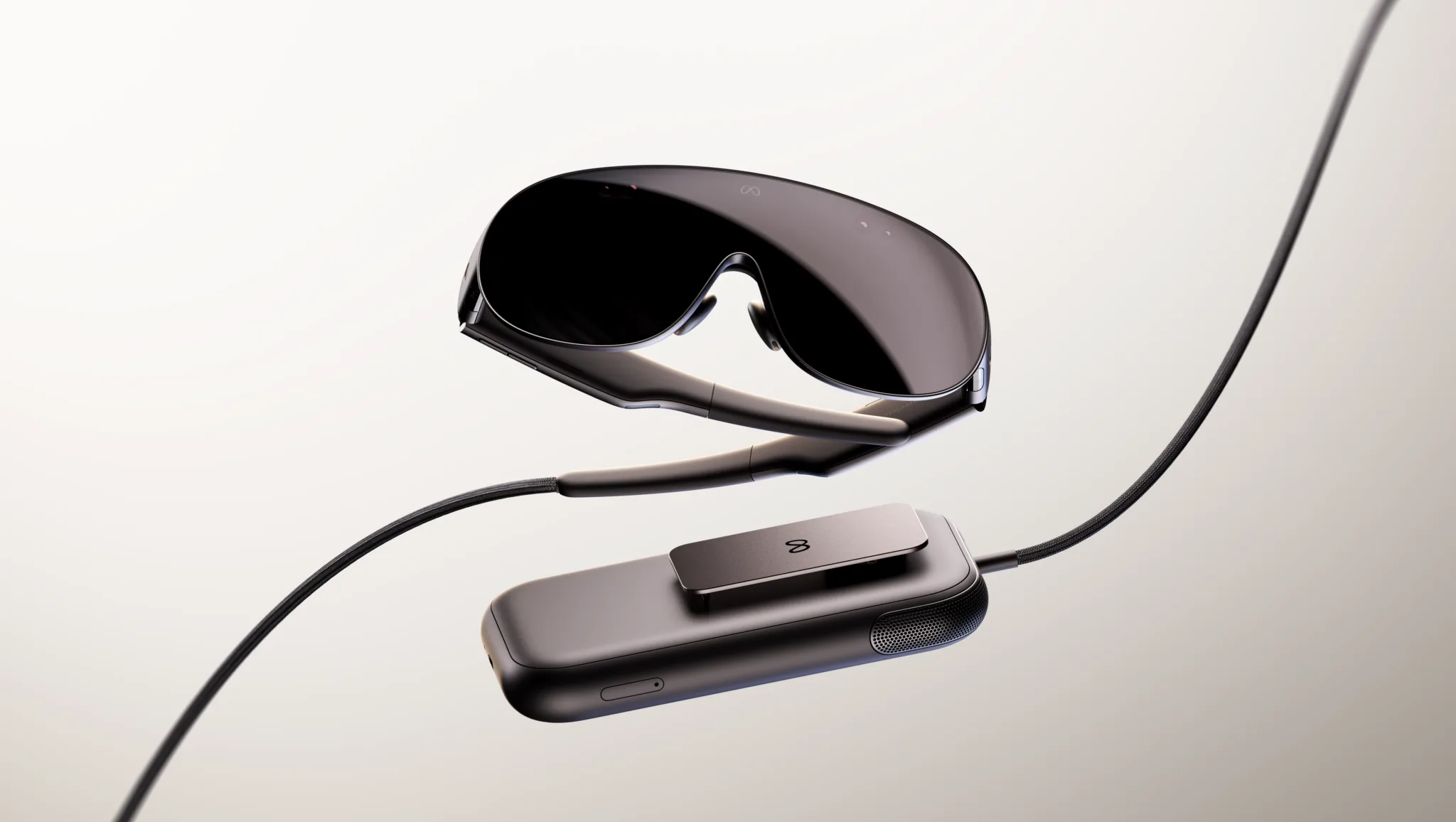
Alongside its smart glasses, Meta has revealed a new generation of virtual reality glasses designed as a lighter alternative to traditional VR headsets.
The new device weighs approximately 100 grams and uses a magnesium-alloy construction. Instead of the bulky design associated with conventional VR headsets, the glasses resemble an oversized pair of spectacles.
The glasses use a 5K microOLED display with 37 pixels per degree, which Meta says provides sharp text and image quality comparable to high-end virtual reality devices such as Apple’s Vision Pro.
The device also includes cameras that allow users to see their surroundings and experience augmented-reality features.
A Separate Computing Puck
One of the most unusual aspects of Meta’s VR glasses is that much of the computing hardware is located in a separate device.
The glasses connect through a cable to a 300-gram pocket-sized computing puck, which contains the processing hardware and a battery providing around three hours of use.
Moving the computing components away from the user’s head allows Meta to make the glasses substantially lighter. Meta says the new glasses are approximately five times lighter than the Quest 3 headset.
Designed for Work and Entertainment
Unlike traditional VR headsets that focus heavily on gaming, Meta says its new VR glasses are designed primarily for productivity and entertainment.
Users can display multiple virtual windows around them and connect the glasses to a Mac or PC to mirror computer displays.
The glasses also support eye tracking and hand-gesture controls. A virtual keyboard can be projected onto a desk or table, allowing users to interact with virtual content without necessarily using physical controllers.
However, the glasses remain compatible with Quest hand controllers and Xbox gamepads for gaming and other applications.
A New Way to Watch Movies
Meta is also positioning the VR glasses as an entertainment device.
The company describes them as “IMAX Enhanced” and says they support 3D movie experiences. At launch, users will be able to access a new Disney+ immersive experience that creates virtual environments inspired by films, including Avengers: Infinity War.
Instead of simply watching a movie on a conventional virtual screen, users can experience digital environments surrounding the cinema screen.
When Will Meta’s VR Glasses Be Available?
Meta’s new VR glasses are expected to launch in spring 2027 across North America, Europe and Asia.
The starting price will be US$1,299.99.
The launch represents another step in Meta’s effort to move virtual and augmented reality technology away from bulky headsets and towards more conventional-looking eyewear.
Privacy Remains a Major Challenge
Meta’s latest announcements highlight two different directions for wearable technology.
The camera-equipped Ray-Ban Meta glasses provide features such as photography, video recording and AI, while the new Audio AI model removes the camera entirely.
The decision to introduce a camera-free option comes as smart glasses face growing public discussion about privacy. Although Meta’s camera-equipped glasses include recording indicators and tampering detection, concerns remain about how wearable cameras should be used around other people.
By offering a camera-free alternative, Meta is attempting to demonstrate that smart glasses can still provide useful AI, communication and entertainment features without recording video.
The Future of Wearable Technology
Meta’s latest products show how rapidly wearable technology is developing. Smart glasses are moving beyond simple audio devices, while virtual reality technology is becoming smaller, lighter and increasingly integrated into everyday-looking eyewear.
The new VR glasses also demonstrate Meta’s attempt to separate computing hardware from the user’s head, potentially making extended VR and mixed-reality experiences more comfortable.
With the camera-free Ray-Ban Meta Audio AI glasses, upgraded camera-equipped models and a new generation of lightweight VR glasses, Meta is expanding its wearable technology portfolio while responding to some of the biggest challenges facing the industry—including privacy, comfort, battery life and the size of traditional VR hardware.
As these products become available in more markets, their adoption will provide a clearer indication of how willing consumers are to incorporate AI, augmented reality and virtual reality into everyday eyewear.